
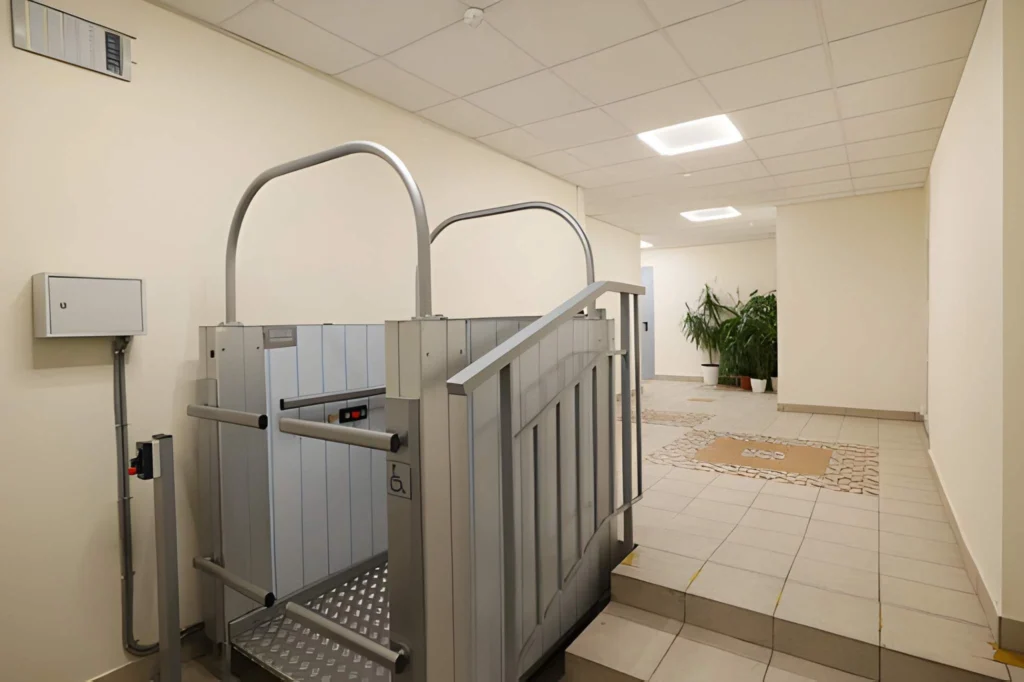
Imagine demanding to ask for help every single time you want to go into your own home or over to your bedroom. Platform Lift for Home: Your 10-Year Freedom Promise.
For millions of Americans with mobility challenges, this isn’t just a vexation; it’s a daily reality that chips down at independence. However, you’ve likely encountered a maze of terms stairlifts, elevators, if you are exploring results.
This companion cuts through the complexity. We’ll explore why a domestic platform lift is a commanding choice for safe, independent access, helping you navigate the decision with confidence and clarity.
Understanding the Platform Lift: Your Indoor-Outdoor Access Solution
So, what exactly is a platform lift for the home? At its core, it’s a powered platform that moves vertically between two situations, much like a simplified elevator. The stoner rolls their wheelchair, scooter, or powerchair onto the platform, secures the safety gate, and presses a button to travel easily over or down.
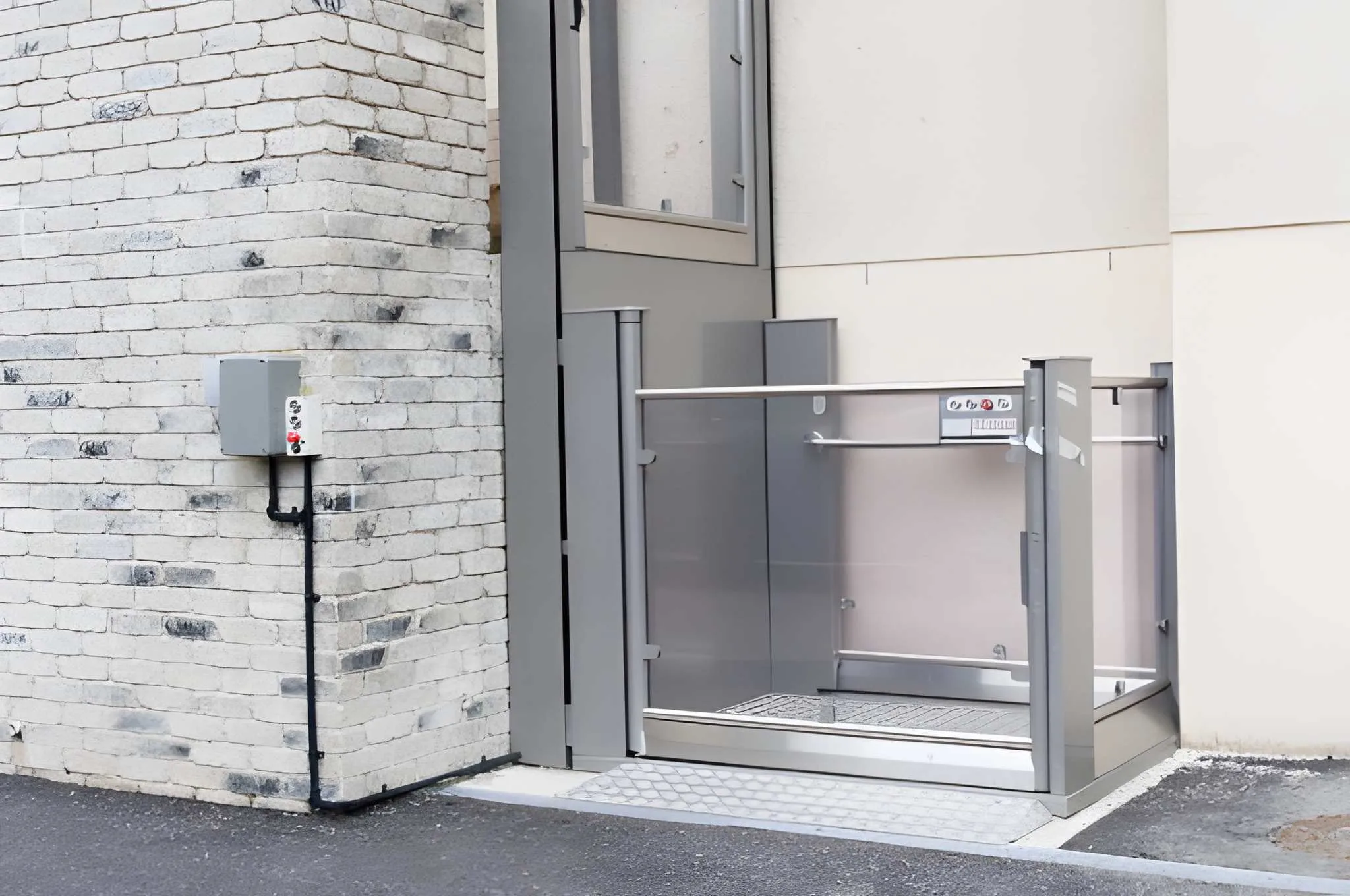
Unlike a ramp, which can bear up to a bottom of length for every inch of rise, a platform lift for home installation is a space-saving phenomenon. It’s designed to conquer perpendicular walls, like veranda way, sunken living apartments, garage entries, or sundeck transitions with minimum footmarks. These lifts are finagled to be installed both indoors and outside, with numerous models erected to repel all types of rainfall for dependable, year-round use.
Platform Lifts vs. Other Home Mobility Options
How does a platform lift stack up against other solutions? The right choice depends entirely on your home’s layout and your personal needs. The table below breaks down the key options.
Feature | Vertical Platform Lift (VPL) | Stairlift (Incline Platform Lift) | Home Elevator |
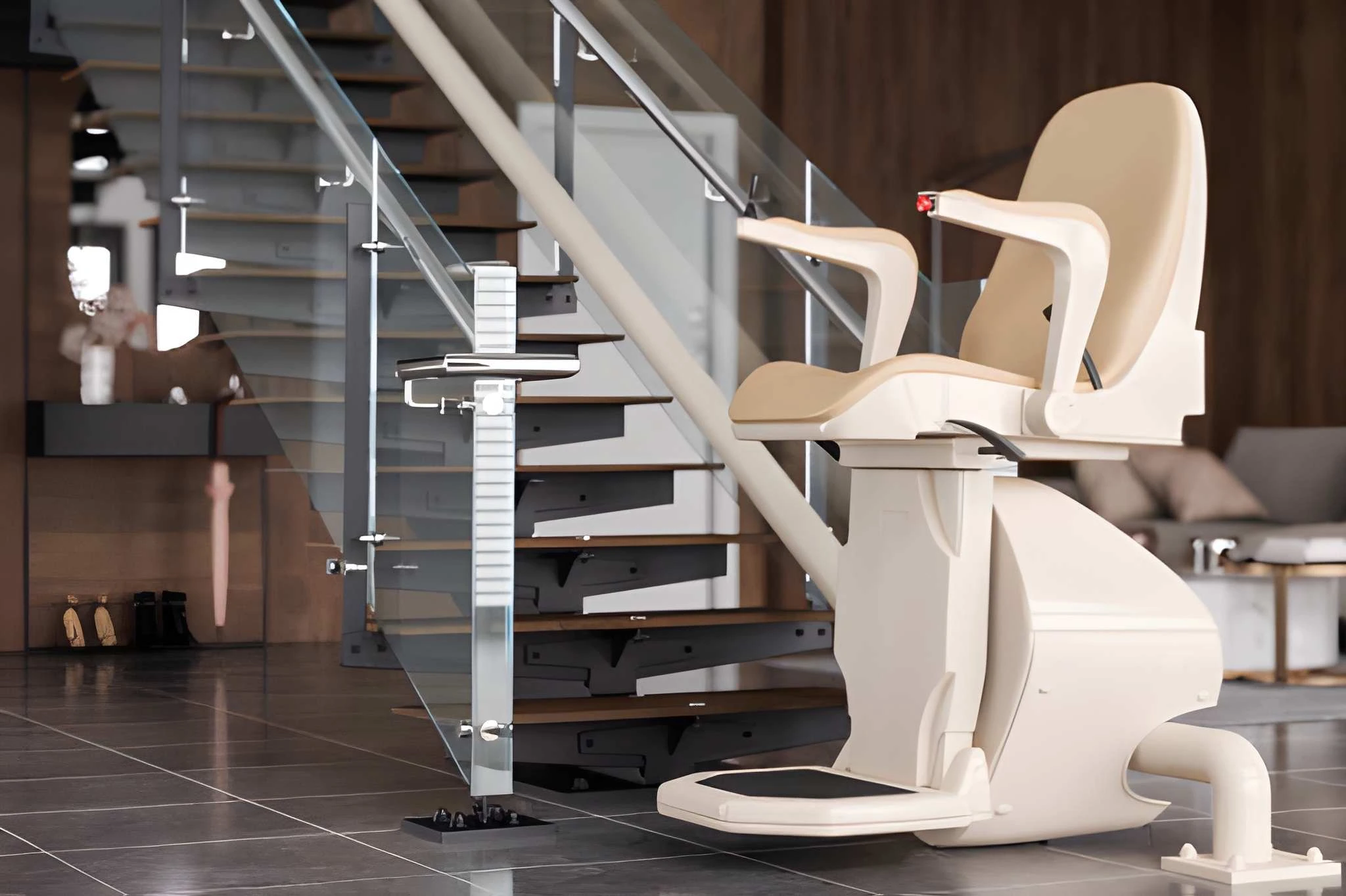
Best For | Wheelchair/scooter users; straight vertical rises indoors or out. | Users who can transfer to a seat; existing staircases. | Whole-home access; multi-story travel; a built-in aesthetic. |
Installation | Requires a dedicated shaft area; less construction than an elevator. | Mounts to staircase treads; minimal structural change. | Requires a full hoistway, significant construction, and the highest cost. |
Space Impact | Compact vertical footprint. Can be freestanding. | Uses the existing staircase; folds when not in use. | Requires the most space for the cab and machinery. |
Typical Use Case | Getting up 3-6 porch steps into the house. | Navigating a straight or curved flight of indoor stairs. | Traveling between the first, second, and third floors of a home. |
Relative Cost | Mid-range: more than a stairlift, less than an elevator. | Often the least expensive option. | The most significant investment. |
For wheelchair users, the primary advantage of a platform lift for home use is clear: you remain safely in your mobility device. There’s no strenuous or risky transfer required, which makes every journey secure and dignified.
Key Benefits of Choosing a Platform Lift for Your Home
Why do so many families choose a platform lift? The benefits extend far beyond basic functionality.
- Unmatched Independence and Safety: recapture the freedom to move between situations in your home without backing. Ultramodern lifts are equipped with essential safety features such as non-slip platforms, automatic retardation systems, safety detectors, and secure gates to ensure peace of mind with every lift.
- A Cost-Effective: Availability result. When comparing options for full wheelchair access, a platform lift for home installation generally offers a more attainable price point than a full domestic elevator, while furnishing analogous core mileage for single-position rises.
- continuity and Low conservation: Quality lifts from estimable manufacturers like Bruno are finagled for times of reliable service. Numerous models, especially those with hydraulic drive systems prized for their smooth operation and reliability, bear only periodic professional conservation.
Inflexibility and Customization: Platform lifts aren’t one-size-fits-all. You can choose from colorful platform sizes to accommodate different mobility biases, voluntary powered gates for easier operation, and finishes that better mix with your home’s surface or innards.
What to Know Before You Buy: Installation, Costs, and Smart Choices
Adding a platform lift for home accessibility is a significant project. Being prepared will ensure a smooth process.
Installation Essentials
While some platform lifts are designed as freestanding units, proper site preparation is crucial. This often involves pouring a stable, level concrete pad at the base for the lift to rest on and for a safe approach. You’ll also need to prepare the top landing for the installation of a safety gate. Importantly, electrical work will be needed to provide power to the lift’s location, whether for direct AC operation or to charge its backup battery system.
Understanding the Investment
The final cost of a platform lift for home use varies. It depends on the model height, platform size, and options like gate drivers or enclosures. Flash back that the quoted price of the lift itself generally doesn’t include necessary point fix, electrical work, or original permits, which can impact your total budget. Always get a detailed, written quotation from your dealer that outlines all these aspects.
The Future is Smart and Sustainable
The request is evolving fleetly. A major trend is the growth of smart, connected lifts that allow for remote monitoring and predictive maintenance. Likewise, there’s a strong assiduity shift towards energy-efficient and eco-friendly designs, with manufacturers integrating regenerative drives and gearless motors that consume minimal electricity, occasionally similar to a standard ménage appliance. When assessing models, considering these forward- allowing features can lead to long-term savings and convenience.
Making Your Decision: Is a Platform Lift Right for You?
Choosing any home revision is particular. Start by asking crucial questions: What specific hedge am I trying to overcome( veranda way, interior position change)? Who’ll be the primary stoner, and what are their specific requirements( type of mobility device, weight capacity)? What’s my realistic budget, including installation?
This is where a professional in-home discussion becomes inestimable. A pukka dealer can assess your unique space, take precise measures, and give a customized recommendation. They can clarify the original structure law conditions and help you navigate the process from launch to finish. The thing is to find the platform lift for home use that doesn’t just function but truly enhances your daily life.
Frequently Asked Questions (FAQs)
Can a platform lift be used outside?
Yes, numerous models are specifically finagled with all-rainfall continuity for dependable outdoor installation on galleries, balconies, or garages.
What happens if the power goes out?
Numerous lifts offer a battery backup option, which allows for several round-trip passages during an outage, ensuring you’re noway stranded.
How important is conservation does a platform lift?
Regular professional servicing is essential for safety and life, but hydraulic systems are known for taking lower conservation than some others.
Are platform lifts covered by insurance or Medicare?
Coverage varies extensively. Private insurance may offer partial coverage if medically necessary, but traditional Medicare infrequently covers home installations.
How long does installation generally take?
Once the point is set, the physical installation of the lift unit by a professional platoon can frequently be completed in just a many days.